PT Nurinda Strengthens Its Presence in the Electrical Industry
11/6/2026
STRATEGIES AND CHALLENGES IN DOMESTIC AND INTERNATIONAL MARKETS
"Indonesia's Domestic Component Level (TKDN) policy still places greater emphasis on monetary value rather than actual industrial processes. This allows major traders to present themselves as manufacturers without conducting genuine manufacturing activities domestically. As a result, local industries struggle to compete and end up becoming mere consumers of foreign products." — Suwardi Setiawan, Director of PT Nurinda
Indonesia's electrical industry continues to grow alongside increasing demand for infrastructure and energy. As one of the key players in this sector, PT Nurinda is further strengthening its presence through adaptive business strategies and expansion into international markets.
Suwardi Setiawan, Director of PT Nurinda, highlighted the significant transformations the company has undergone since its establishment.
"In 2001, we began transitioning into electrical panel manufacturing after being affected by the monetary crisis. Thankfully, in 2006, we officially became PT Nurinda, and since then, our primary focus has remained on the electrical industry," he explained.
As part of the vital infrastructure industry, PT Nurinda continuously adapts its business strategies to remain relevant amid technological advancements and evolving market demands. In recent years, New and Renewable Energy (NRE) has become one of the company's major areas of interest, driven by global efforts to reduce carbon emissions.
However, Suwardi also highlighted the challenges facing green energy development in Indonesia.
"Currently, the green energy industry is experiencing a slowdown, particularly as major countries such as the United States are shifting their attention back toward fossil-based energy. Indonesia itself still has a relatively low carbon footprint, so we need to be careful in managing this energy transition," he explained.
According to Suwardi, although PT Nurinda has begun expanding into the renewable energy sector, the company continues to maintain its business activities in fossil-based energy due to sustained market demand.
"We follow market demand. At present, coal remains Indonesia's primary energy source, and as long as the transition toward green energy is still underway, we cannot simply ignore it," he added.
To address industry challenges, PT Nurinda is not only focusing on the domestic market but is also expanding its reach into international markets, particularly the Middle East and Southeast Asia.
"Meanwhile, the domestic market continues to grow rapidly, particularly in regions such as Sumatra, Kalimantan, Sulawesi, and Papua. However, we also see significant opportunities overseas, including in Saudi Arabia, Oman, and the Philippines," Suwardi stated.
In the Philippines, PT Nurinda has identified potential market opportunities due to the country's electrical standards, which are more closely aligned with American standards (NEMA), unlike Indonesia, which generally follows European standards (IEC).
"This presents an opportunity because the trade tensions between China and the United States have opened doors for other manufacturers, including ourselves, to enter markets previously dominated by Chinese products," he explained.
Meanwhile, the Middle Eastern market has also become a major focus of the company's expansion strategy, particularly as countries such as Saudi Arabia are undertaking large-scale electrical infrastructure development.
"The scale of electrical infrastructure development in Saudi Arabia is almost comparable to that of Indonesia as a whole, even though its population is significantly smaller. This demonstrates the enormous opportunities available for us to explore," he added.
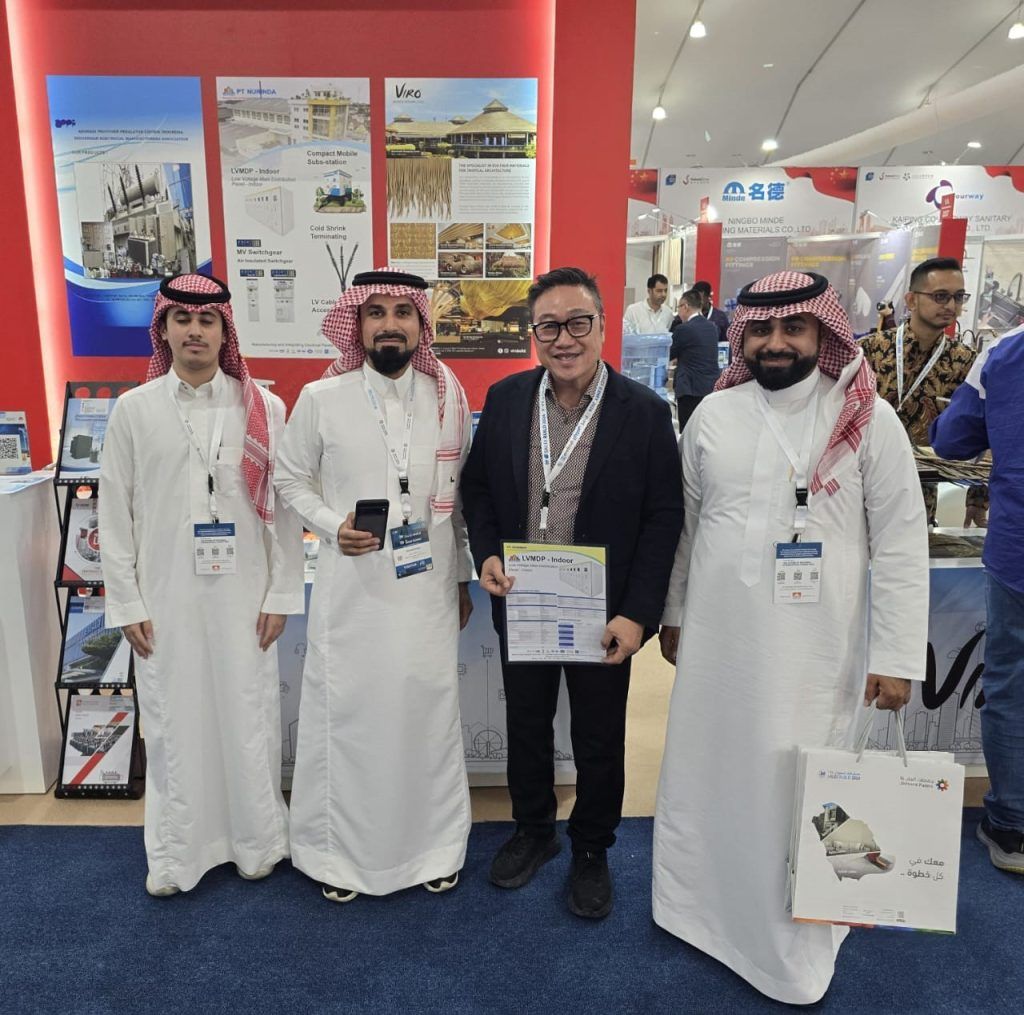
*The Middle Eastern market is also a key focus of PT Nurinda's expansion, particularly as countries such as Saudi Arabia continue to develop their electrical infrastructure on a large scale.*
*Photo: Instagram @pt_nurinda*
## Support and Challenges
As part of its business development efforts, PT Nurinda also collaborates with the Indonesian Electrical Equipment Manufacturers Association to seek government support. One of the major concerns receiving increasing attention is cybersecurity within the manufacturing industry.
"I recently held discussions with Indonesia's National Cyber and Crypto Agency (BSSN) regarding cybersecurity threats in the industrial sector. This issue is extremely important because cyberattacks can threaten economic stability and critical infrastructure, as demonstrated by incidents affecting the oil and water supply sectors in the United States," Suwardi stated.
Beyond cybersecurity, PT Nurinda has also emphasized the need for stricter regulations regarding the implementation of the Domestic Component Level (TKDN) requirements.
According to Suwardi, numerous companies are currently exploiting loopholes in TKDN regulations to market imported products as domestically manufactured goods without carrying out the required manufacturing processes in Indonesia.
"Indonesia's TKDN policy still places greater emphasis on monetary value rather than actual industrial processes. This allows major traders to present themselves as manufacturers without genuinely conducting manufacturing activities domestically. Consequently, local industries struggle to compete and ultimately become mere consumers of foreign products," Suwardi explained.
He believes that TKDN regulations should place greater emphasis on actual manufacturing processes rather than simply evaluating the monetary value of products.
"We hope the regulations will be improved to ensure that domestic industries receive genuine protection. Otherwise, over time, Indonesia risks becoming merely a market for imported products," he emphasized.