PT Nurinda Set to Launch Medium-Voltage Cable Jointing and Termination Products
11/6/2026
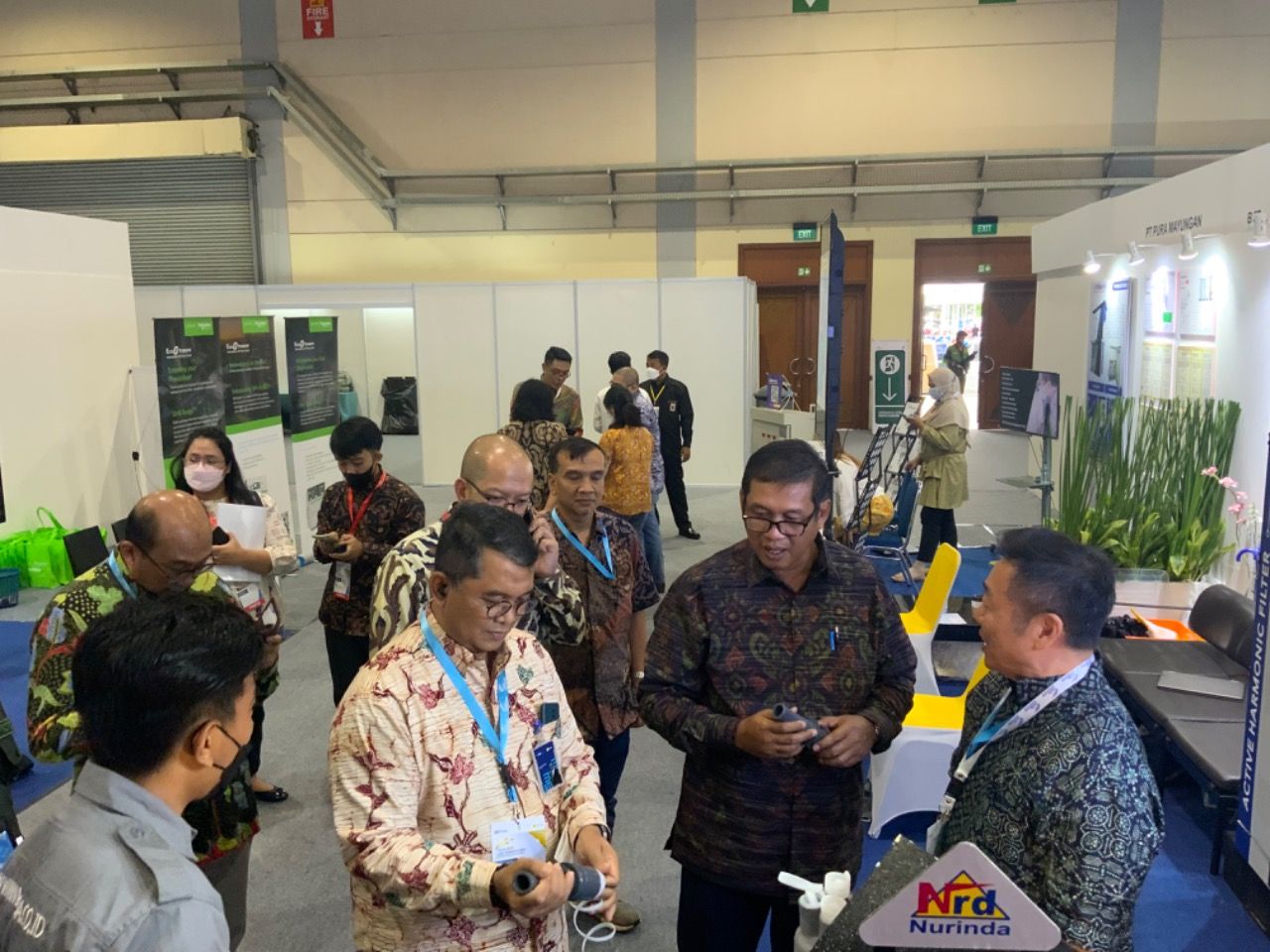
Nurinda demonstrates a strong commitment to increasing its Domestic Component Level (TKDN), with an average local content utilization rate ranging from 30% to 50%.
PT Nurinda is a manufacturing company specializing in electrical panels and equipment. Positioning itself as an innovative and highly competent manufacturer, the company frequently develops customized solutions to meet its customers' specific requirements, including advanced features, configurations, and structural designs for electrical panel systems.
These designs cover power distribution, control, monitoring, and measurement within modern and sophisticated electrical distribution systems. Through its technical expertise and innovation, PT Nurinda has established strong business relationships with leading local and international companies, including PT PLN (Persero), PT Schneider Indonesia, and PT 3M Indonesia, and is recognized as an authorized distributor.
"We have conducted type testing and obtained certifications for many of our products through the Indonesian Electrical Certification Laboratory (LMK – PT PLN Pusertif). We have also achieved ISO 9001:2015 certification for our quality management system. In terms of manufacturing processes, we have successfully met the Quality Control System Standards (SPM) established by the Indonesian Certification Committee. Additionally, our financial performance has been evaluated by PT D&B (Dun & Bradstreet), and we are included in PLN's Selected Company List (DPT)," explained Suwardi Setiawan, President Director of PT Nurinda.
PT Nurinda was established in 1994, initially serving customers ranging from the State Electricity Company (PLN) to various private-sector industries. Most of its products are designed for low-voltage electrical distribution systems, although several are also suitable for medium-voltage applications. Its product portfolio includes Low Voltage Main Distribution Panels (LVMDP), Capacitor Banks, Automatic Meter Reading (AMR) Panels, Medium-Voltage Control Panels, Portable/Mobile Substations, and many other electrical solutions.
According to Suwardi, entering 2023, the utilization of locally manufactured components was expected to increase significantly in the coming years. Nevertheless, PT Nurinda had already received approval from PT PLN to import medium-voltage cable jointing and termination products, which were still marketed under American and French manufacturers' brands.
However, Suwardi emphasized that this arrangement was based on a clear long-term strategy. PT Nurinda had assured PT PLN of its readiness to become a domestic manufacturer capable of producing equivalent products with the same specifications and quality standards as those manufactured in the United States and France.
In fact, these efforts had already been initiated by the end of December 2022, resulting in the launch of the company's initial products.
"Although concerns about a potential recession continue to affect the global economy, our jointing and termination production activities remain ongoing. It appears that the industry we are developing has not been significantly affected by the global economic recession that has become a major concern for many businesses," Suwardi added.
PT Nurinda has also demonstrated a strong commitment to increasing its Domestic Component Level (TKDN), with average local content utilization ranging from 30% to 50%. Nearly every year, the company's efforts to incorporate domestically manufactured components have received recognition from the government.
"These awards motivate us to continuously improve the quality of the products we manufacture. Recognition provides us with greater exposure and encourages us to enhance product quality while increasing the use of local components. When I first entered this industry, our local content utilization was practically 0%. Today, it has reached nearly 40%, and in some cases even higher," Suwardi explained.
Nevertheless, the implementation of TKDN across many industries remains challenging, with average local content utilization often reaching a maximum of approximately 40%. This is primarily because numerous essential raw materials and components still need to be imported, as domestic manufacturers are not yet available for certain materials, such as silicon steel.
An exception may apply to industries that primarily utilize locally produced steel, as materials can be supplied by domestic manufacturers such as PT Krakatau Steel, whose products also serve international export markets.
Regarding solar panels, PT Nurinda has also taken steps toward expanding its manufacturing capabilities. However, production remains limited, and its products have not yet gained significant traction within PLN, partly because the utility still holds substantial inventories of existing solar panel products, despite differences in product packaging.
PT Nurinda's solar panel business also faces challenges related to the upstream manufacturing industry. Essential components, including semiconductor chips and other related materials, are not yet widely manufactured domestically.
This situation is one of the reasons investors have been reluctant to enter the sector, as establishing such manufacturing facilities requires substantial capital investment. Even if production facilities were developed, the domestic market might not yet generate sufficient demand to support their operations.
This creates a significant dilemma for the industry.
Suwardi explained that the number of Tier 1 solar panel manufacturers worldwide was relatively limited, citing approximately 32 companies at the time. Meanwhile, although 13 companies were registered with the Indonesian Solar Module Manufacturers Association (APAMSI), he believed that achieving Tier 1 status would be difficult because many manufacturers continued to depend on imported components.
He also highlighted concerns regarding product quality consistency, particularly when importing materials and components from overseas, as maintaining the same quality from the time of ordering until delivery could not always be guaranteed.
"I have heard that some investors are prepared to invest in solar panel manufacturing, but I do not know who they are or when these investments will be realized. The investment requirements could reach trillions of rupiah, and developing such an industry is certainly not an easy undertaking," Suwardi concluded.
*(TN)*
**Source:** Trust News, Issue No. 56, January 9, 2023.
[Original Publication – Google Drive](https://drive.google.com/file/d/1IR9YavRi96M13FdpQ7Z9yjiL8OeRUxbL/view)