Nurinda Accelerates Expansion into the Communal Solar Power Market
11/6/2026

Global Oil Crisis
NURINDA ACCELERATES EXPANSION INTO THE COMMUNAL SOLAR POWER MARKET
May 15 – June 15, 2026 | www.triasinfo.com
The closure of the Strait of Hormuz opens new opportunities for green energy sources. Nurinda sees this opportunity not only in selling electrical panels but also in developing communal solar power systems.
Every crisis presents an opportunity. This sentiment aptly describes the current global energy crisis triggered by conflicts in the Middle East and the threat of closure of the Strait of Hormuz.
For many countries, dependence on fossil fuels is not merely an environmental concern but also a serious geopolitical vulnerability.
Meanwhile, Indonesia, an archipelagic nation located along the equator, is beginning to see a promising shift, although somewhat belatedly. There is growing awareness that dependence on coal not only contributes to environmental and public health problems but also threatens national energy sovereignty.
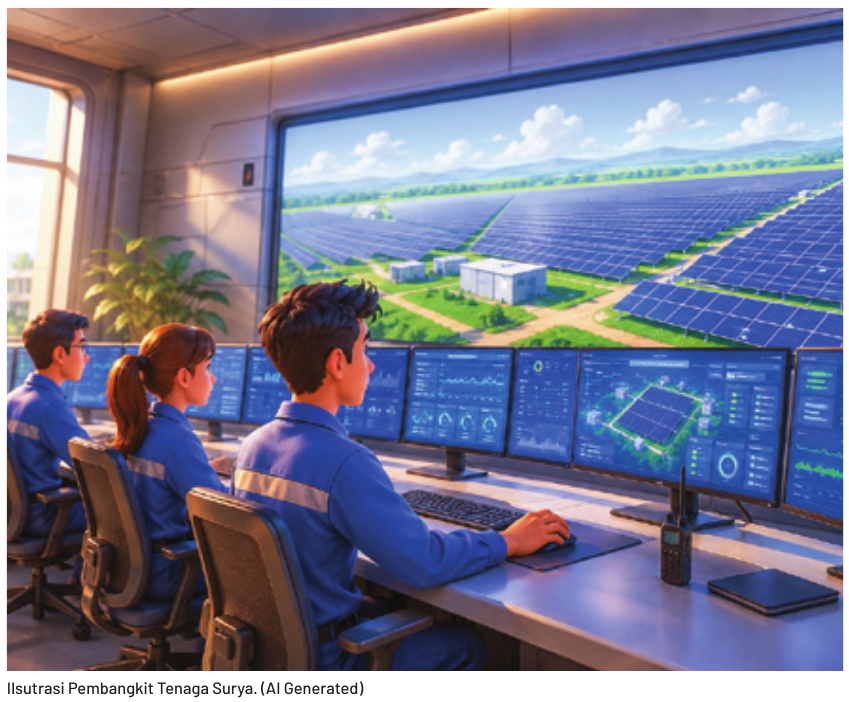
Solar Power Plants (PLTS), once regarded as a green energy ambition whose development progressed at a slow pace, are now emerging once again as a viable energy solution.
Suwardi Setiawan, President Director of PT Nurinda, an electrical infrastructure company with 25 years of experience in the industry, sees a different momentum emerging this time.
"Solar power is beginning to gain momentum again," he told Trias. He acknowledged that PLN remains the company's largest customer, but private-sector businesses, particularly mining companies and independent power producers, are increasingly showing interest in solar energy.
"The question is whether Indonesia is truly ready this time," he remarked calmly.
In his view, geothermal energy has long been regarded as one of Indonesia's most promising alternative energy sources. As a volcanic country, Indonesia has enormous geothermal potential. However, much of that potential is located far from the areas where electricity demand is concentrated.
"Where are the people, and where are the geothermal resources?" he asked.
On Java Island, Indonesia's center of economic activity, geothermal resources are relatively limited. Sumatra has geothermal potential, but the resources are located far from major demand centers. Furthermore, the initial investment costs are extremely high, comparable to those involved in oil drilling.
Therefore, in principle, solar power presents one of the most rational alternatives. Indonesia is a tropical country where sunlight is widely available. Although cloud cover frequently creates challenges, hybrid technology supported by battery energy storage systems can now help manage fluctuations caused by sudden changes in solar irradiation.
"The power outages in Portugal and Spain last year were partly attributed to disturbances involving solar power systems, particularly uncontrolled power surges. With appropriate energy buffering systems, such risks can be reduced," he explained.
Having spent 25 years supplying low-voltage and medium-voltage electrical panels to both private companies and PLN, Suwardi has gained considerable insight into why Indonesia's solar power development has experienced periods of growth and decline.

He recalled that solar power was once a growing trend several years ago before gradually losing momentum. One of the main reasons was the excess electricity generation capacity on Java Island.
"PLN was reluctant to add more solar power capacity because the electricity infrastructure investments that had already been made could end up being underutilized," he explained.
Another challenge involves grid stability. Due to the intermittent nature of solar energy, PLN had limited the contribution of solar power to approximately 10–15% of total capacity. "This is a technical issue that certainly needs to be addressed," he stated.
However, regulations began to mature last year. The government and PLN eventually recognized that off-grid and hybrid solar power systems would not necessarily disrupt grid stability.
"Nevertheless, frequent regulatory changes have caused solar power development programs to fluctuate over time," he explained.
Another factor that previously hindered development was the relatively immature state of the technology. Suwardi compared this evolution to mobile phones, where newer, more advanced, and more affordable models are introduced almost every year. Similarly, solar panel capacity has progressed from 250 watt-peak (Wp) to 300 Wp, 400 Wp, 600 Wp, and now 700 Wp. According to him, the technology has only recently reached a more stable stage with the introduction of 700 Wp modules.
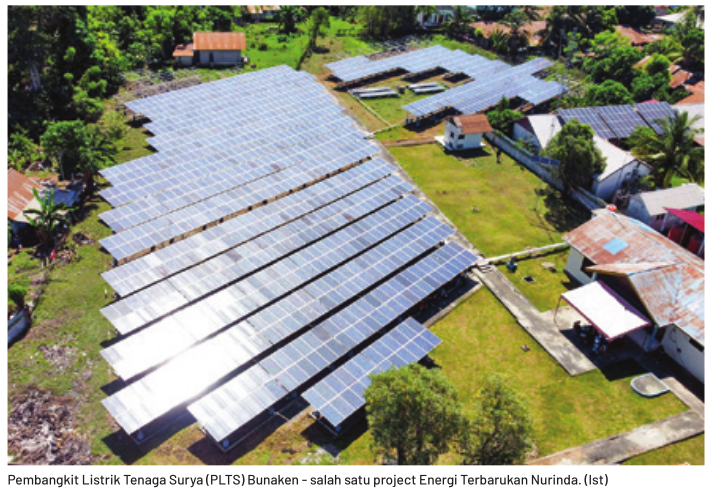
"One of our flagship products is the communal solar power system designed for remote areas," he added. Looking ahead to 2026, Nurinda's strategy focuses on diversification and innovation. Initially specializing in low-voltage distribution panels, the company has since expanded into medium-voltage cable jointing products, portable and permanent solar power systems, and partnerships with Chinese companies to manufacture medium-voltage switchgear (MV cubicles).
After-sales services have also become an integral part of the company's business strategy. "Sometimes products do not always perform as expected, or customers may not fully understand how to operate them," he explained. Therefore, customer service plays an essential role in building and maintaining trust.
"If we simply stand still, we are actually moving backward," he concluded. (TR)
www.triasinfo.com | May 15 – June 15, 2026
"The technology has now reached maturity," he emphasized. Greater technological stability has made investment return calculations more predictable. This progress is further supported by increasing public awareness and a more consistent regulatory framework.
Solar power now offers four major advantages: abundant natural resources, mature technology, growing public awareness, and a clear regulatory framework.
he explained.
However, not every market segment is equally suitable for solar power installations. In the residential sector, solar power faces two major challenges. The first is limited space. In urban areas, where land prices are high, houses are often built vertically, leaving relatively small rooftop areas. Installing solar panels on a small scale can make installation and inverter costs economically inefficient.
In contrast, commercial sectors such as office buildings, factories, and mining operations are particularly suitable for solar power because their electricity consumption primarily occurs during daylight hours. At remote mining sites, solar power can also replace fuel-powered generators that require expensive fuel transportation and logistics.
"We see this as an opportunity for our company to provide not only electrical panels but also comprehensive energy solutions," he stated.