Loopholes in TKDN Regulations Remain Open to Exploitation
11/6/2026
IN THE YEARS AHEAD, DEVELOPMENT IN THE ELECTRICAL SECTOR WILL ACCELERATE. INDONESIAN ELECTRICAL EQUIPMENT MANUFACTURERS MUST BE PREPARED TO TAKE THE LEAD IN THEIR OWN DOMESTIC MARKET.
— Damar Rusli
As Indonesia continues to advance its national development, domestic industries should play a significant role in driving economic progress, including in the development of the electrical sector. However, in reality, Indonesia has frequently become a market for foreign manufacturers whose products are often considered more affordable than locally manufactured alternatives.
This situation has raised concerns among members of the Indonesian Electrical Equipment Manufacturers Association (APPI), as the competitiveness and capabilities of domestic manufacturers are increasingly being challenged.
According to Suwardi Setiawan, Vice Chairman of APPI, membership in the association is strictly reserved for manufacturers. Companies that do not conduct actual manufacturing activities are not eligible to become members.
"The problem is that some large trading companies claim to be small-scale manufacturers. This undermines fairness in the industry," Suwardi emphasized.
He explained that APPI has 11 specialized divisions, each responsible for auditing its members.
"As a result, we may reject membership applications from companies that do not qualify as genuine manufacturers," he stated.
Suwardi also referred to the Ministry of Industry's definition of a manufacturer, which requires a company to demonstrate the ability to transform a product's physical form, properties, and function through industrial processes.
According to Suwardi, manufacturers and industrial enterprises serve as the backbone of Indonesia's economy.
"When the manufacturing industry grows, the trickle-down effect becomes tangible. We invest, circulate money throughout society, stimulate economic development, and create employment opportunities," he explained.
The growth of domestic industries is expected to stimulate broader economic expansion. This aligns with the government's target of achieving 8% economic growth within the next five years.
Therefore, domestic manufacturers, including those represented by APPI, play an essential role in strengthening Indonesia's economy. Without a thriving local manufacturing sector, achieving such an ambitious economic growth target would become significantly more challenging.
## Nurinda and the Backbone of Indonesia's Electrical Industry
Suwardi Setiawan is an experienced figure in Indonesia's electrical equipment industry. He established PT Nurinda, a company widely recognized for manufacturing electrical panels, in 1994.
However, PT Nurinda began actively participating in PLN's utility sector in 2001.
"Previously, we focused more on the general commercial market, although we were still operating in the electrical industry. From the beginning, we emphasized manufacturing independence and believed that electrical equipment should be produced domestically whenever possible," Suwardi recalled.
According to him, participating in the utility sector requires compliance with the technical standards established by PLN, known as SPLN.
PT Nurinda has maintained a partnership with PLN since 2001.
"Therefore, our products must meet PLN's required standards," he explained.
In terms of manufacturing capacity, Suwardi stated that PT Nurinda has consistently demonstrated its ability to meet PLN's equipment requirements.
"We have been capable of supplying PLN's electrical equipment needs throughout Indonesia," he said.
He further emphasized that the company operates in compliance with applicable business standards and PLN's procurement requirements.
"We have aligned our operations with PLN's requirements, enabling us to supply electrical equipment across Indonesia," Suwardi explained.
Beyond product quality, PT Nurinda also prioritizes reliable delivery schedules and efficient administrative processes.
Another advantage highlighted by Suwardi is the company's strong record of customer satisfaction, with very few complaints regarding products supplied to PLN.
"Fast administrative processing and prompt product delivery are among the key strengths we continuously prioritize," said Suwardi.
PT Nurinda operates a manufacturing facility in Cikupa, Tangerang, which, at the time of the interview, employed approximately 350 people.
Regarding efforts to strengthen domestic manufacturing competitiveness, Suwardi emphasized the importance of cooperation between local manufacturers and the government.
This collaboration is essential because the government establishes the regulations governing industrial development and market competition.
"Until now, one of the main regulatory instruments used to control the influx of foreign and imported products has been the Domestic Component Level (TKDN) requirement," he explained.
Suwardi also outlined three major categories of PT Nurinda products supplied to PLN:
- **Low-Voltage Distribution Panels (PHBTR):** Electrical distribution equipment designed for low-voltage networks.
- **Medium-Voltage Switchgear (PHBTM):** Switching and protection equipment for medium-voltage electrical distribution systems.
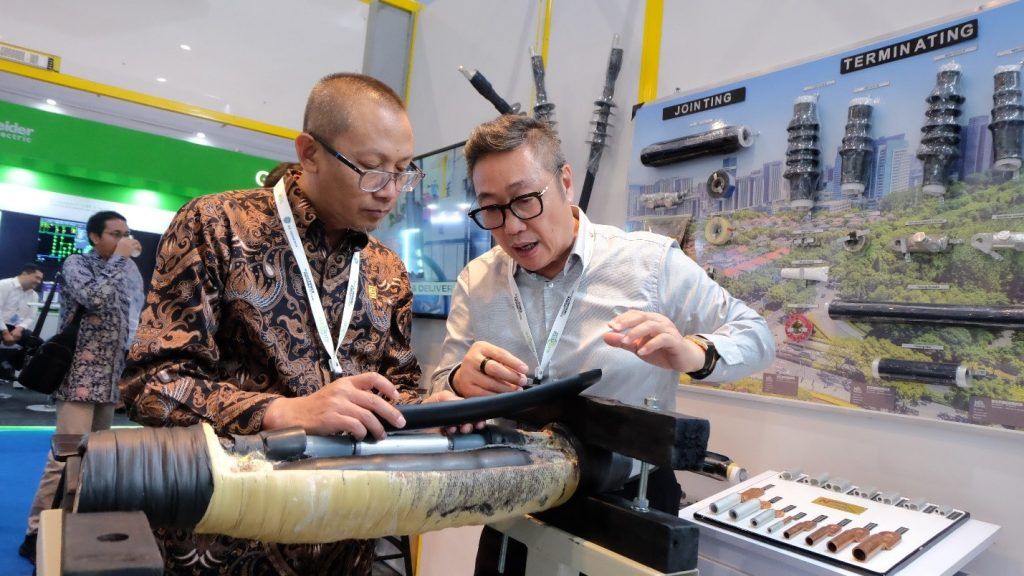
- **Medium-Voltage Cable Jointing and Termination Products:** Components used to connect and terminate cables in medium-voltage networks.
He emphasized that the TKDN percentage varies across different products, depending on the availability of domestic materials and the technical requirements of each product category.
For example, PT Nurinda's cable jointing products require certain chemical materials that must still be imported.
"We use silicone rubber, which currently has to be imported because domestic manufacturers are not yet capable of producing it. Therefore, we cannot apply the same TKDN percentage to every product," Suwardi explained.
## Challenges in Implementing Domestic Component Level (TKDN) Regulations
Suwardi also expressed concerns regarding the implementation of Indonesia's Domestic Component Level (TKDN) policy.
One of his primary concerns is that TKDN assessments tend to focus on the components used in a product rather than the actual manufacturing processes performed domestically.
He referred to the government's **Program for Increasing the Use of Domestic Products (P3DN)**, an initiative designed to encourage consumers, businesses, and government institutions to prioritize domestically produced goods over imported alternatives.
However, Suwardi believes that the distinction between domestic products and domestic manufacturing processes is not sufficiently emphasized.
"The key term being used is 'product,' not 'production.' As a result, the policy does not place enough emphasis on the manufacturing process itself," he explained.
According to Suwardi, this creates regulatory loopholes that may allow imported goods to enter the domestic market while being classified as local products.
"This is why I believe the current TKDN framework still leaves opportunities for imported products to enter the market. The term 'domestic product' can easily be misinterpreted. If we focus on domestic production, however, we must examine the actual manufacturing processes involved," he emphasized.